Have you ever wondered which is best, rubber ear plugs or foam ear plugs? First, hearing protection plays a critical role in workplace safety. Construction sites, manufacturing facilities, warehouses, road crews, and industrial plants often expose workers to noise levels that can damage hearing over time. Also, repeated exposure to loud equipment, power tools, compressors, generators, and heavy machinery can lead to permanent hearing loss. Ear plugs help reduce noise exposure and protect workers from long-term hearing damage.
Understanding Ear Plug Noise Reduction Ratings
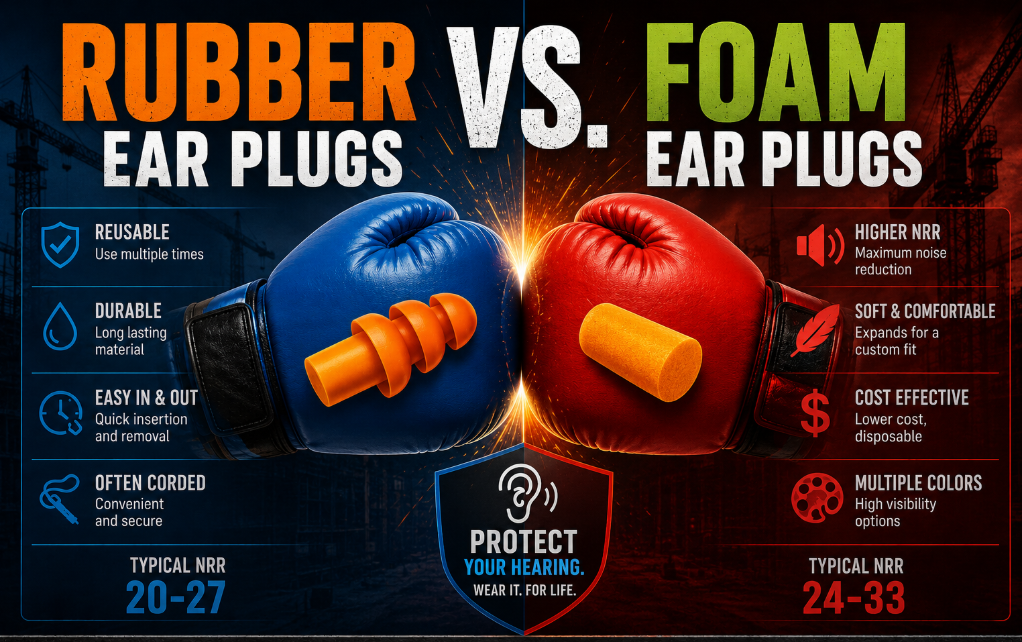
Next, it helps to understand the Noise Reduction Rating, known as NRR. Manufacturers assign an NRR value to indicate how much noise a hearing protection device can reduce under ideal conditions. Ear plugs range from NRR 20 to NRR 33, depending on the design and materials used. Also, higher NRR ratings often provide greater noise reduction, although proper fit plays an important role. Even the highest rated ear plug cannot deliver maximum protection if it does not fit correctly inside the ear canal.
What Are Foam Ear Plugs?
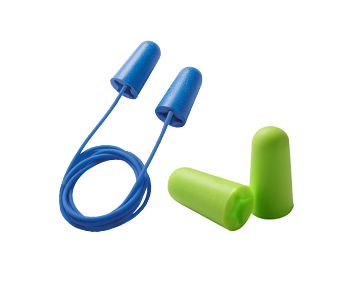
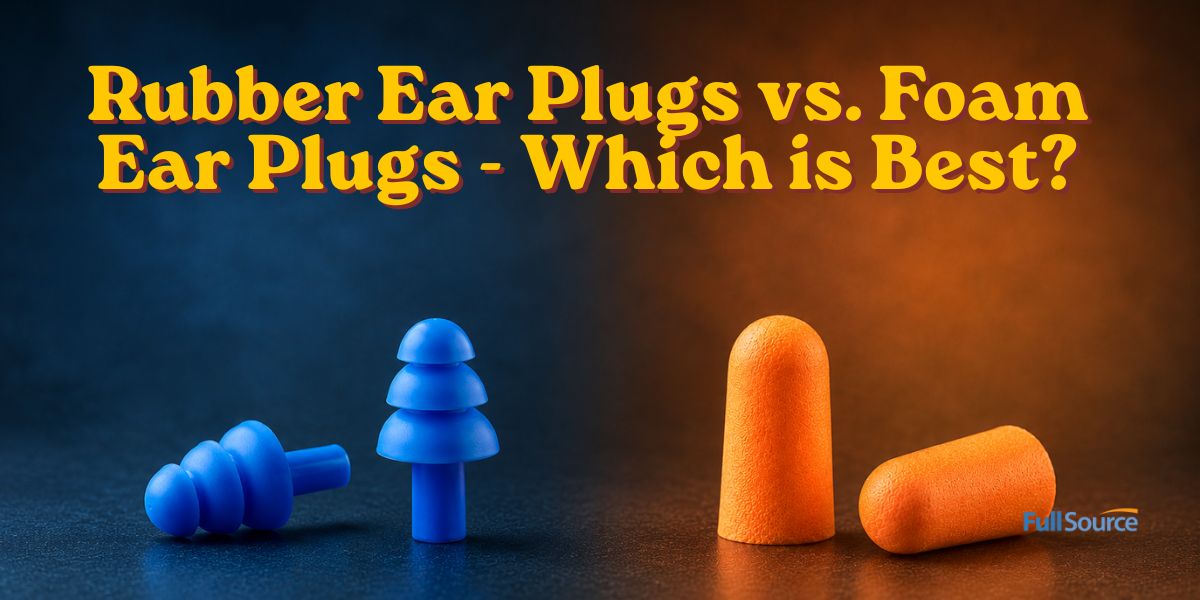
Additionally, foam ear plugs remain one of the most popular hearing protection options available today. Most foam ear plugs use soft polyurethane foam that expands after insertion to create a snug seal inside the ear canal. To use, roll the plug between your fingers, insert it into the ear, and allow the material to expand. Also, many disposable foam ear plugs come in bright colors such as orange, red, green, purple, and blue for easy visibility and compliance checks. Brands such as Howard Leight, Radians, Pyramex, PIP, Portwest, and DeWalt offer foam ear plugs with NRR ratings ranging from 24 to 33.
Advantages of Foam Ear Plugs
Furthermore, foam ear plugs provide excellent noise reduction for many work environments. Their soft material conforms to the shape of the ear canal, helping create an effective seal against hazardous noise. Workers often choose foam plugs when they need maximum attenuation around loud equipment and machinery. Also, foam styles tend to cost less than many reusable options, making them ideal for large crews and disposable applications. Many safety managers prefer foam ear plugs because workers can easily replace them when they become dirty or worn.
Potential Drawbacks of Foam Ear Plugs
However, foam ear plugs do have limitations. Workers must insert them correctly to achieve the advertised NRR rating, and improper insertion can significantly reduce protection. Some users find the expansion pressure uncomfortable during long shifts. Also, since most foam plugs serve as disposable products, workers must replace them regularly, which increases waste and ongoing supply costs. Dirty hands can also transfer contaminants to the ear plug during insertion, creating hygiene concerns in certain environments.
What Are Rubber Ear Plugs?
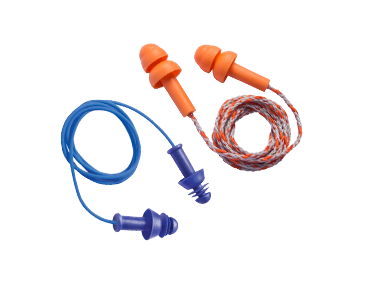
Meanwhile, rubber ear plugs offer a reusable alternative for hearing protection. Most reusable models use soft rubber, silicone, or thermoplastic elastomer materials and feature multiple flanges that create a seal within the ear canal. Unlike foam plugs, rubber ear plugs do not require rolling or expansion before insertion. Workers simply push them into place and remove them when necessary. Popular manufacturers including MSA, PIP, Howard Leight, Portwest, Pyramex, Radians, and DeWalt offer reusable rubber ear plugs in colors such as orange, blue, green, red, yellow, black, and multi-color combinations.
Advantages of Rubber Ear Plugs
Moreover, reusable rubber ear plugs offer convenience and durability. Workers can clean and reuse them multiple times, making them a cost-effective option for daily use. Their flange designs allow quick insertion and removal, which benefits workers who move between noisy and quieter environments throughout the day. Also, many reusable styles include cords that help prevent loss and keep ear plugs readily available. Because they maintain their shape, users often find them easier to insert correctly than disposable foam styles.
Potential Drawbacks of Rubber Ear Plugs
On the other hand, rubber ear plugs generally provide lower NRR ratings compared to premium foam options. Many reusable styles fall within the NRR 20 to 27 range, although some exceed those values. Also, uniquely shaped ear canals may struggle to achieve a perfect seal with standard flange designs. Some users also report discomfort after extended wear if the ear plug size does not match their ear canal properly. Regular cleaning remains essential because dirt and debris can accumulate on reusable materials over time.
Comparing Comfort and Fit
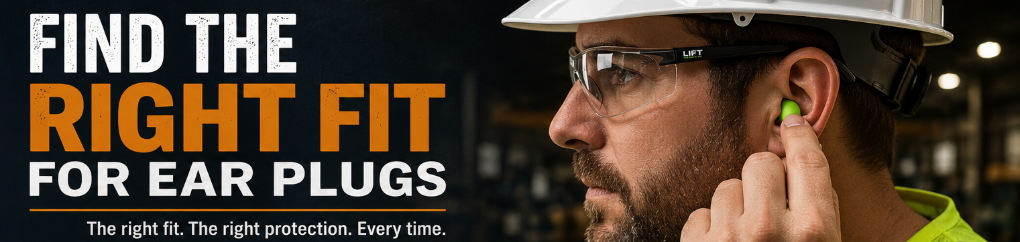
Similarly, comfort often depends on personal preference and ear shape. Foam ear plugs adapt to individual ear canals, which many workers find comfortable once inserted correctly. Rubber ear plugs maintain a fixed shape and provide faster insertion, but some users notice pressure from the flanges during long shifts. Also, wearers who frequently remove and reinstall hearing protection often prefer reusable rubber styles because they save time and maintain consistent fit. Testing both options remains the best way to determine which style feels most comfortable throughout a workday.
Comparing Cost and Value
Likewise, cost plays an important role when selecting hearing protection. Foam ear plugs usually cost less per pair, making them ideal for temporary use, visitors, and large workforces. Rubber ear plugs require a higher initial investment but offer long-term savings because workers can reuse them repeatedly. Also, companies with hearing conservation programs often stock both options to accommodate different worker preferences. Providing multiple choices can improve compliance and encourage consistent hearing protection use.
Popular Ear Plug Brands for the Workplace
Additionally, several leading safety brands offer quality hearing protection solutions. PIP provides a wide selection of disposable and reusable ear plugs for industrial environments. Radians offers colorful foam and reusable styles with various NRR ratings and corded options. Also, Pyramex manufactures economical hearing protection designed for construction and general industry. DeWalt focuses on durable hearing protection products that complement its broader job site safety lineup. MSA, Howard Leight, and Portwest offer low-cost industrial ear plugs that meet the demands of professionals.
Which Ear Plug Is Best?
Ultimately, the best ear plug depends on your work environment, comfort preferences, and hearing protection needs. Workers exposed to extremely loud environments often choose foam ear plugs because of their higher NRR ratings and excellent sealing capabilities. Employees who need reusable protection and quick insertion frequently prefer rubber ear plugs for their durability and convenience. Both options provide valuable protection when worn correctly and consistently.
Conclusion
In conclusion, both foam ear plugs and rubber ear plugs offer effective hearing protection for job sites and industrial workplaces. Foam ear plugs tend to deliver higher noise reduction and lower upfront costs, while rubber ear plugs provide reusability, convenience, and long-term value. By considering comfort, fit, NRR ratings, and workplace conditions, you can select the hearing protection that best supports your safety and hearing health.